Alex Le

Senior UI/UX designer · Design systems · Industrial & automotive UI

Alex Le

I design the systems behind dense industrial and automotive interfaces — and build them with code and AI.

5+ years across car infotainment for Genesis, Hyundai and Kia, and inspection software for electronics factories. Before that, eight years of graphic design and animation.

B1
The layout of an inspection programming screen, drawn from its measured zones. Point at it to see them.

Selected work

Projects

01PRIMITIVES02SEMANTIC03COMPONENTSCREENwhite#ffffffneutral-100#f0f0f0neutral-250#d8d8dcneutral-500#b0b0b4neutral-600#888888neutral-700#555555neutral-850#2d2d30neutral-900#1a1a1asurface-controlsurface-inputsurface-panelsurface-headerborder-defaultborder-activetext-mutedsurface-titlebartext-primarybtn-bgbtn-borderinput-bginput-textB1six screens,one token setchange oneprimitive andevery screenfollows

01 · Case study · 2026

Twin-V

A web rebuild of an inspection machine's native interface, and the design system, quality gate and AI workflow that let a team of three ship it.

Design systemAI workflowIndustrial HMIReact
Read the case study →
  • 698design tokens in three tiers, zero hardcoded colors
  • 24automated checks before every code push
  • 95%of commits co-authored with an AI agent
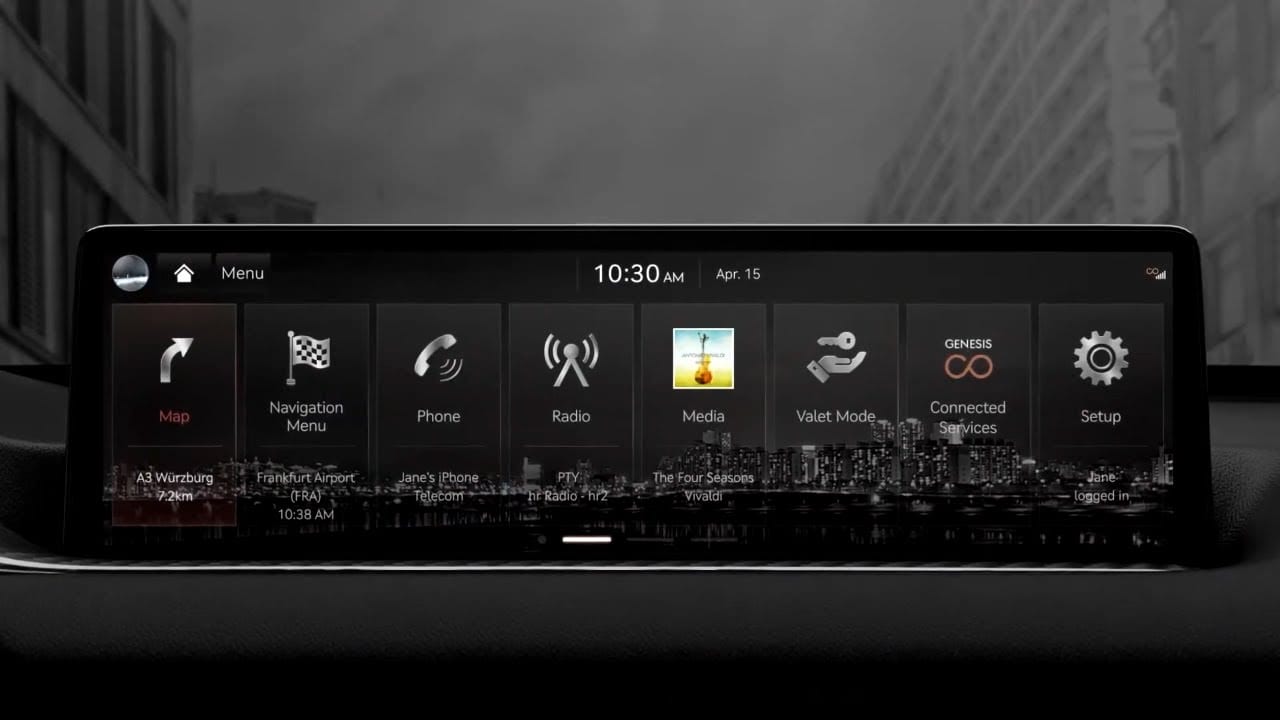
Genesis head-unit home screen with eight app tiles: map, navigation, phone, radio, media, valet mode, connected services and setup

02 · Automotive IVI · 2021–2023

Infotainment System

Led two UI teams delivering a multi-market infotainment platform: 63 applications, 8 visual themes and 3 000+ screens across head-unit and cluster, with one typography system for six writing systems, from Latin and Greek to Chinese, Japanese, Cyrillic and Arabic.

Team leadDesign systemMulti-languageAutomotive HMI
  • 63applications across 2 core modules
  • 8visual themes, one component library
  • 10k+pages of design guidelines maintained
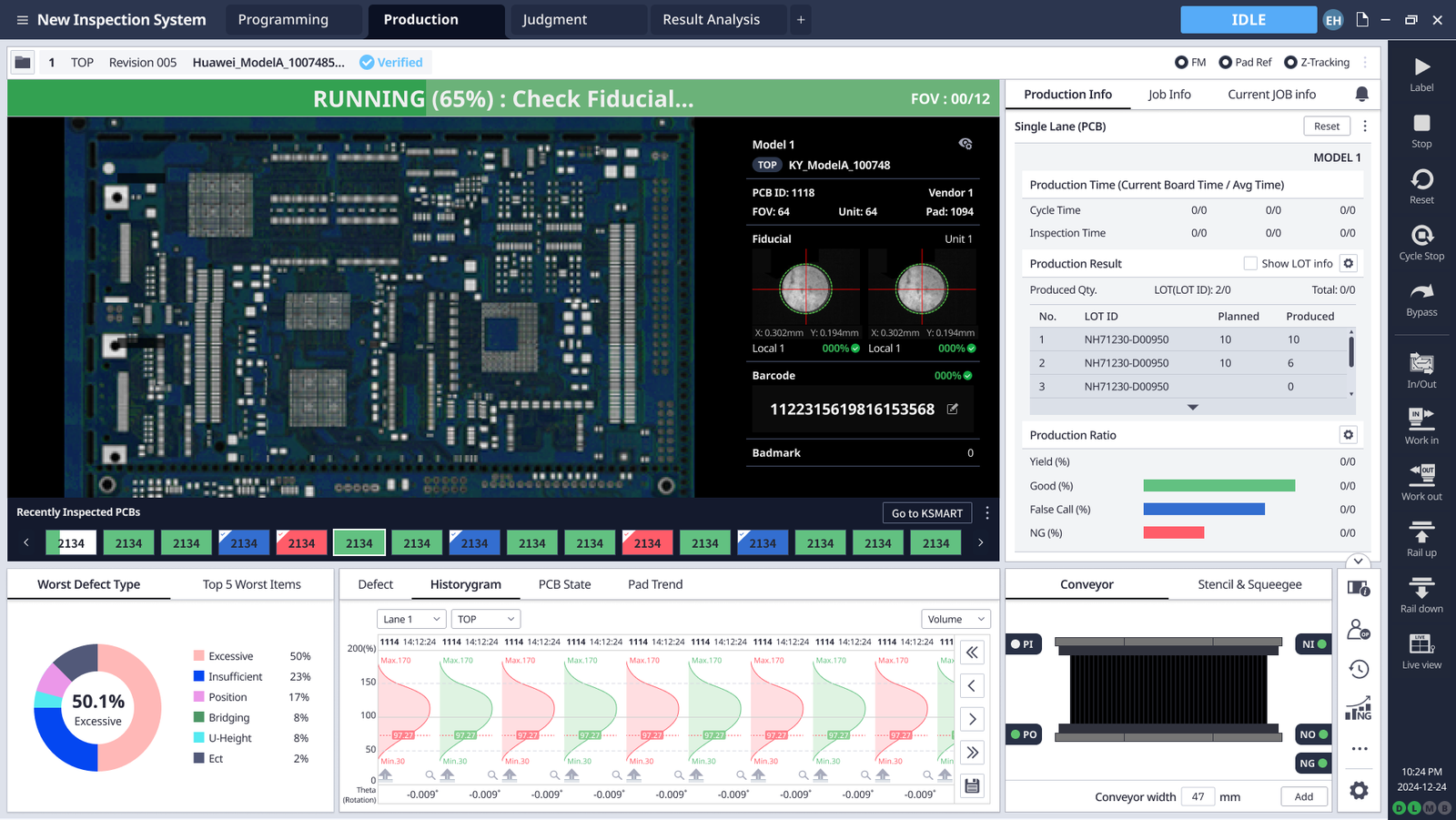
Production screen designed under the OneUX standard: board viewer, production stats, defect histogram and conveyor

03 · Visual product styleguide · 2023–2024

RtoS — OneUX

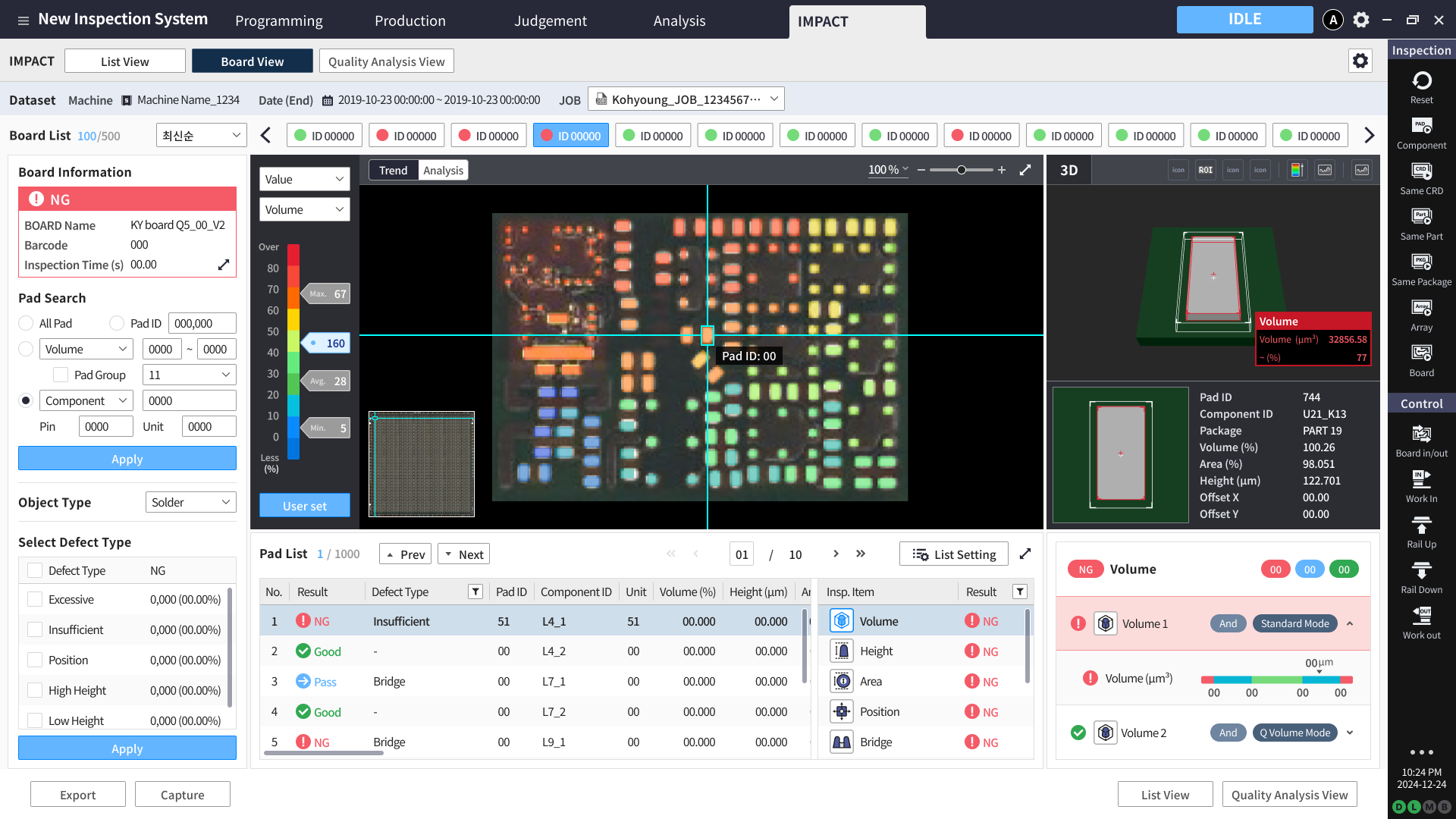
An inspection machine with 60+ screens had no unified visual language. I created one — original typography, color philosophy and modular layout — as the product's first visual standard.

Design researchVisual standardIndustrial HMIScreen design
  • 60+existing screens studied
  • 6design elements, one visual language
  • 3key screens designed at full fidelity
Read the case study →
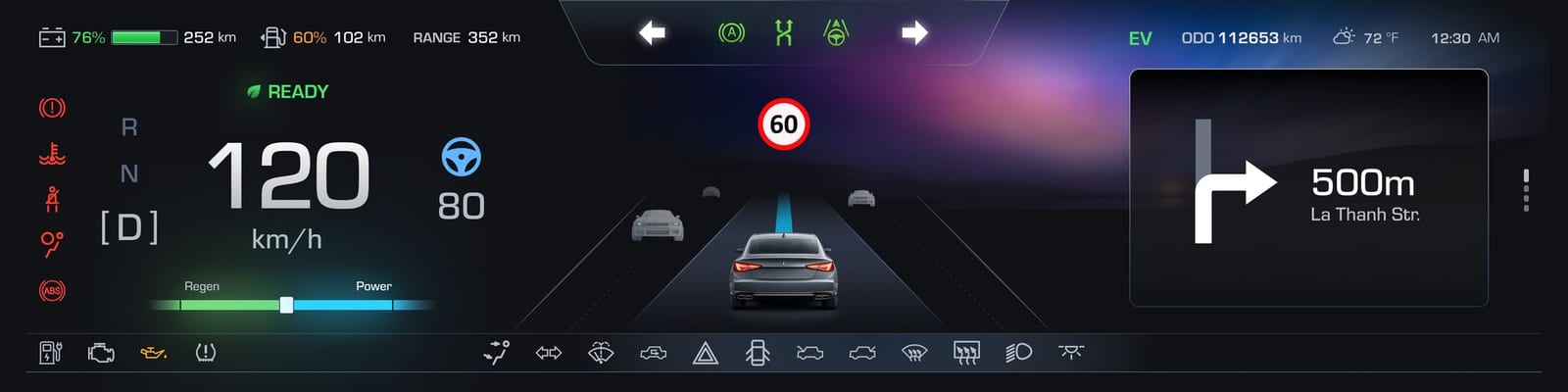
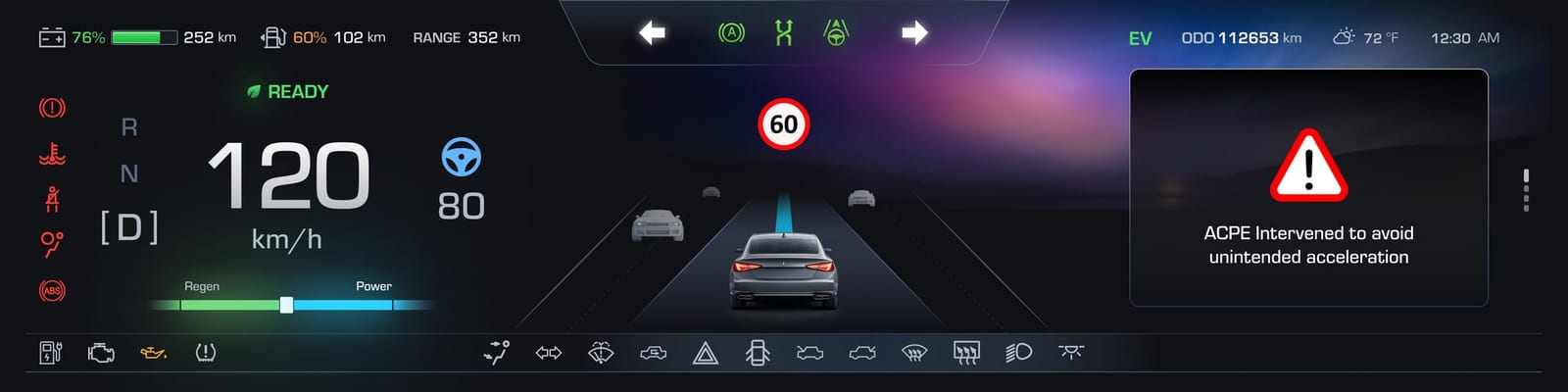
Ultra-wide instrument cluster: energy bar with battery, fuel and range across the top, red critical telltales down the left edge, speed 120 km/h, an ADAS lane view in the centre and a turn-by-turn widget on the right The same cluster with the right-hand widget switched to a safety warning

04 · Personal concept · 2025

Digital Instrument Cluster

A cluster concept for a range-extended electric vehicle on an ultra-wide 1920 × 480 display. Battery, fuel and total range share one energy bar, while speed, the ADAS view and safety warnings stay readable at a glance.

ConceptAutomotive HMIInformation hierarchyUltra-wide layout
  • 5information zones across the display
  • 6context widgets, from media to trip summary
  • 3telltale priority tiers, critical on the left
Read the case study →
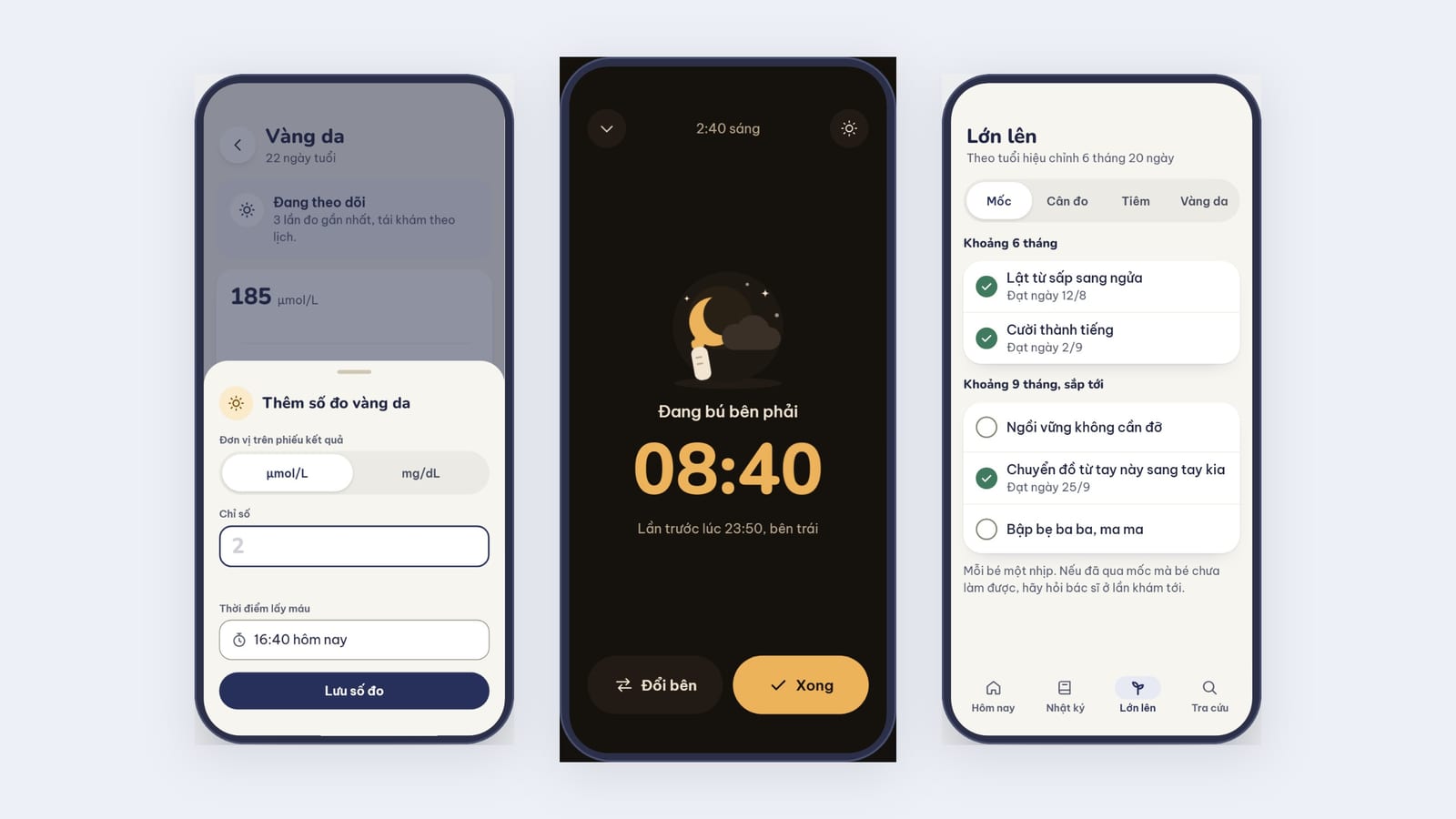
Three phone screens: jaundice level tracking, a night-mode feeding timer, and a developmental milestone checklist

05 · Personal project

Baby Diary

A health-tracking app for newborns, designed around the questions new parents actually ask: is this reading normal, when was the last feed, is the baby on track. Vietnamese-first, built for one-handed use during night feeds.

Mobile appHealth trackingNight modeVietnamese
  • 6moments of one day, a screen for each
  • 10data types, each with its own save rule
  • 4illustrations, kept out of charts and alerts
Read the case study →

About

Designer who ships the system

I work where interfaces are dense, users are experts, and mistakes are expensive.

I spent eight years in graphic design and animation, where I learned typography, color, layout and motion timing. Then I spent two years leading UI teams on car infotainment for Genesis, Hyundai and Kia: 63 applications and 3 000+ screens across passenger, commercial and electric vehicles, with one type system for six writing systems.

Now I lead design systems for SMT inspection software, the machines that check circuit boards on factory lines. The work covers shared tokens and components across product lines, dense inspection screens, monitoring dashboards and data-analysis tools. On the Twin-V web rebuild I also write the code, with an AI agent working inside rules the build checks.

I care about details, from data-informed decisions to pixel-level execution, and I believe great design happens when aesthetics meet usability. I am currently expanding into accessibility and inclusive design.
  • Standards before taste

    Industrial HMI guidelines decide what color means, before any style does.
  • Rules the build enforces

    A design rule that only lives in a document drifts. I turn rules into checks.
  • AI with guard rails

    The agent writes; checks and human sign-off decide what ships.

Experience

Where I have worked

Design

Design systems and tokens, dense operational UI, automotive HMI, multi-language type, WCAG-aware review

Lead

Team coordination, mentoring, design review and QA, client communication, planning and delivery

Build

React, TypeScript, Tailwind, Style Dictionary, automated quality checks, AI agent workflows

Tools

Figma and plugin development, FigJam, W3C DTCG tokens, LCH color, VS Code, Git, Playwright, Claude Code

Contact

Open to design systems and complex product work.